A street terrace can look effortless from the pavement: a few tables, a row of planters, an umbrella angled just so. Then the first busy lunch service arrives. Guests squeeze past each other, staff carry trays sideways, and the far table sits in full sun at six o’clock. None of these problems is exotic, and most are cheaper to fix on paper than after opening.
The mistakes below come up again and again when a pavement, courtyard, or roadside space becomes outdoor dining. The fixes are not complicated, but they do require a slow hour with a tape measure and a willingness to walk the space as both a guest and a server.
Mistake 1: Squeezing the walkway until it disappears
It is tempting to add one more two-top. Then one more four-top. Soon the clear route from the street to the door is a polite fiction: guests shuffle sideways, a parent with a pram stops, and a server with a tray waits while someone decides which way to move.
Measure the narrowest point of the route, not the widest. Walk it at service pace with a full tray, or with two shopping bags, or with a friend who uses a walking stick. If you have to turn your shoulders, the layout is too tight. Mark proposed table positions with painter’s tape and leave a buffer beyond the chair edge; diners push back, bags land on the floor, and people stop to read menus. Check local pavement-licensing and accessible-route rules before finalising anything; those details vary by place and are not worth guessing at.
Mistake 2: Letting the sun and wind win
Shade is not a single decision; it is a moving target. A row of umbrellas that works at noon may leave the western tables exposed at six. A wall that blocks the morning breeze may funnel it down the side of the building in the afternoon. Watch the space at three or four times of day before buying anything, and note where the sun lands and where napkins take off.
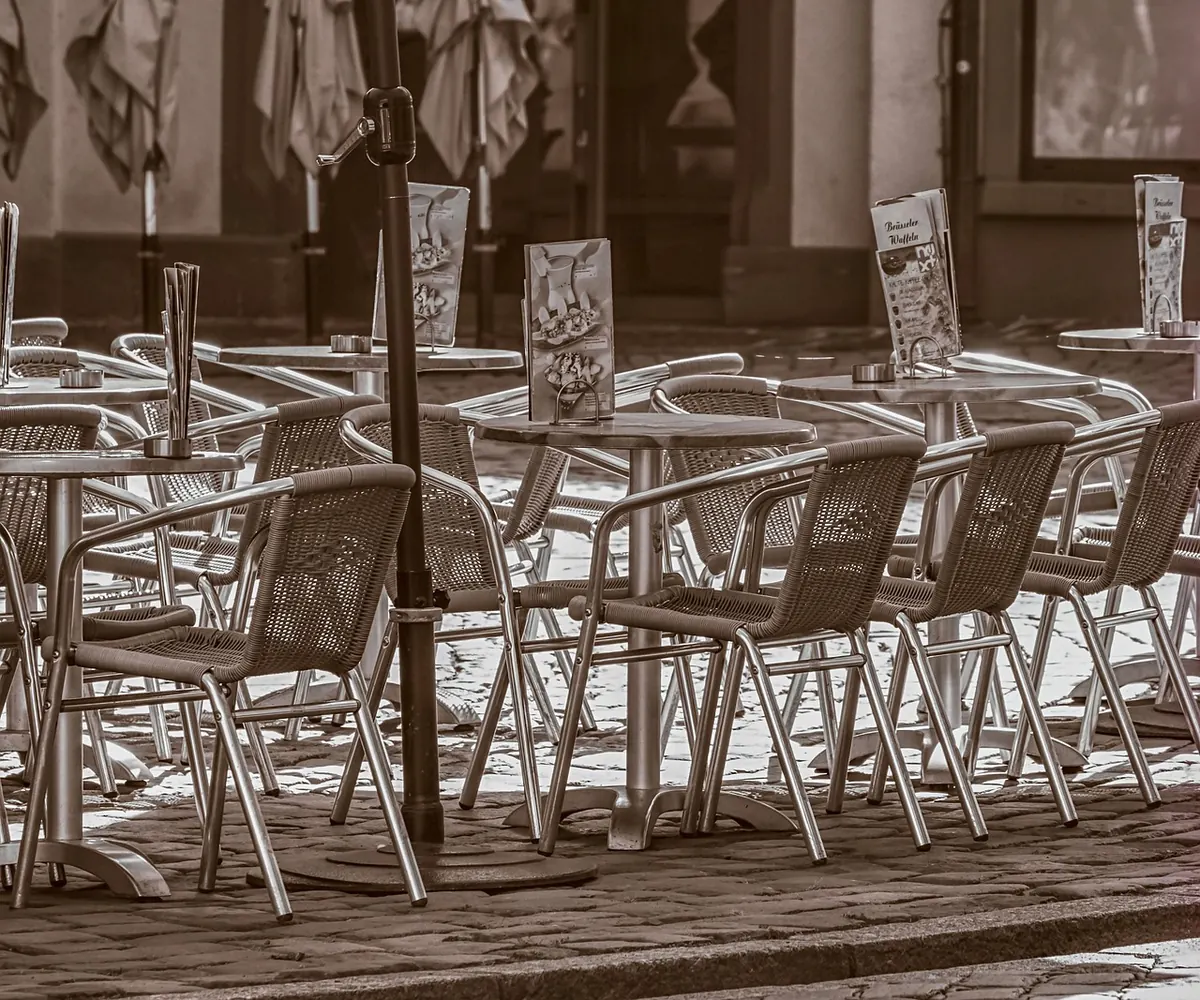
Umbrellas help, but they are not the whole answer. A fixed awning, a slatted pergola, or a row of planters can do more for comfort than lightweight parasols that wobble in a gust. Secure bases properly and avoid creating a sail. If the terrace catches strong wind, choose furniture that stays put and shade that can be retracted or removed quickly.
Mistake 3: Forgetting the service path and storage
Guests see the terrace. Staff see the route from the kitchen door to the farthest table, the place to put down a tray, and the stack of cushions that needs a home at closing time. If those things are an afterthought, service becomes a slalom.
Before falling in love with a layout, trace three routes:
- Guest entry: where people arrive, wait, and find a host.
- Service route: how a server reaches every table without crossing through another conversation.
- Reset route: how staff clear and reset a table without carrying dirty plates past diners at eye level.
Storage is part of the design, not a separate chore. Cushions, umbrellas, heater covers, and wet-weather screens all need a home. If the only home is a corner of the dining area, the terrace will lose seats every time the weather turns. A slim lockable bench or a discreet cupboard can save more space than a clever table arrangement.
Mistake 4: Treating the street edge as a hard line
A terrace needs an edge, but not a cage. A rope line, a row of planters, or a low screen tells people where the dining area begins and gives diners a sense of shelter. Done badly, the same edge feels like a barricade: it blocks sightlines, traps noise, and makes the space feel defensive.
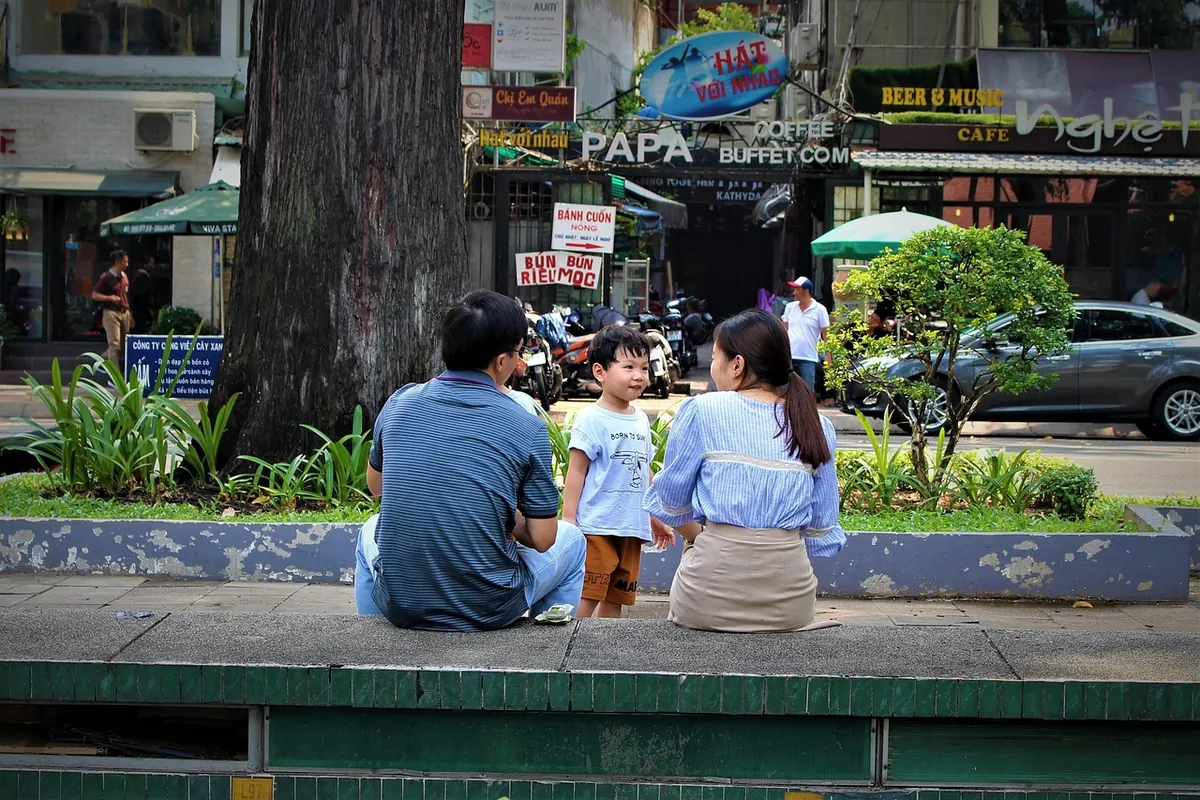
Planters are often the most forgiving boundary. They add green, weigh down an edge, and can be moved if the layout changes. Low screens can soften traffic and give the closest tables privacy, but keep them low enough that guests do not feel sealed in. Leave gaps for entry, for staff, and for passers-by to see that the terrace is open. Pay attention to what diners face, too. A table looking straight at a busy road may need a planter more than a table overlooking a quiet square.
Mistake 5: Leaving lighting until the last week
Lighting is not just about seeing the menu. It changes how the terrace feels after dark. A space that looks charming at five o’clock can look like a waiting room at nine if the only lights are cold and overhead. Bad lighting creates glare for guests, shadows for staff, and trip hazards on the ground.
Plan three layers: light for the table, light for the route, and light for the edge. Table lighting should be warm and low enough to flatter faces without shining into eyes. Path lighting should make steps, cables, and changes in level obvious. Edge lighting can mark the boundary without turning the terrace into a stage.
Test everything at night with the real furniture in place. Sit at the tables, walk the service route, and check whether the far table is squinting at a menu or sitting in shadow. Use dimmers, keep cables out of walkways, and make sure staff know how to switch the circuits separately.
Two final mistakes: perfect-weather planning and the missing trial run
Mistake 6: Designing for a perfect day
Every terrace looks good in mild sun with no wind. The test is what happens when the weather changes. A sudden shower, a cold evening, or a gusty afternoon can empty a space in minutes if there is no plan.
Decide in advance which tables are the first to go when rain arrives, where wet cushions will dry, and whether you need a small awning or side screens. If you use patio heaters, follow the manufacturer’s instructions, secure them, and check local rules; professional installation and advice are worth taking seriously. Keep a simple wet-weather routine behind the bar so staff are not improvising while guests get wet.
Mistake 7: Opening without a trial run
A soft opening is not a luxury; it is a diagnostic tool. Invite friends or regulars for a limited service and run the terrace exactly as you would on a normal day: real menu, real trays, real staff routes, real closing routine.
Watch for the small failures that are hard to see on a plan: guests pulling chairs into the walkway, servers cutting through a table, umbrellas blocking a sightline, a queue forming where you expected a clear entrance. Keep the painter’s tape nearby and move a table or two if the space asks for it. A week of small adjustments before a full launch is cheaper than a season of apologies.
A practical pre-opening checklist
Before the first paying guest arrives, spend an hour with a tape measure, a notebook, and a colleague who will tell you the truth. Then run through this list:
- Measure the clear walkway at its narrowest point and walk it with a tray.
- Watch the shade at morning, midday, late afternoon, and sunset.
- Trace the guest, service, and reset routes from end to end.
- Decide where cushions, umbrellas, screens, and heater covers live overnight.
- Test the lighting after dark, including the route to the WC and the terrace edge.
- Write a one-page wet-weather plan and keep it where staff can find it.
- Run a soft opening with real food, real trays, and real timings.
- Ask two people who do not work there to find the entrance without help.
Most terrace mistakes are not dramatic. They are small tensions that repeat every service: a tight corner, a sunlit table nobody wants, a cable that catches a shoe. Fix those before opening, and the terrace will do the harder work of making people want to stay for one more coffee.
Photo: Couleur / Pixabay