You turn a corner in a neighborhood you have never walked before. It is early afternoon, you are hungry, and there are three terraces within sight: one on the sunny side, one wedged against a kiosk, one half-empty under a plane tree. The wrong choice costs you an hour and a slightly sticky table. The right one becomes the reason you come back to this street. Reading a terrace takes about two minutes if you know what to look at, and none of it requires a review, an app, or a local friend. It requires your eyes, your backside, and a little patience.
Start with the shade, not the view
Shade is the first thing to judge, and the easiest thing to get wrong. A terrace that looks lovely at 12:30 can be an oven by 14:00, because the awning only covers two tables and the building's shadow is retreating. Before you sit, look down. Where are the shadow lines on the pavement? Are they moving toward the tables or away from them?
Not all shade is equal. A deep awning or an arcade creates cool, still air; a single parasol over a sun-baked square creates a hot patch with a bright rim, and the heat rises off the stones. Trees are the best version: dappled, and getting cooler as the afternoon goes on. Metal chairs in direct sun hold heat for a long time, so if the seat looks pale and dry and the shadow of the parasol is off to one side, keep walking.
The umbrella test
If the umbrellas are furled at the height of the day and the staff are standing in the doorway in the shade, that tells you something about how the place is run. It does not have to be a disaster, but it means the terrace is not the point. Also check the wind. A corner site between two tall buildings can funnel a breeze that turns a pleasant lunch into a napkin chase, and the staff will know it: look for jugs, menus and ashtrays weighed down with something.
Decode the foot traffic
There are two kinds of people passing a terrace, and they behave differently. Through traffic is going somewhere: fast, straight, phone in hand. Neighborhood traffic is drifting, stopping, greeting someone, reading a menu board. A good street terrace sits on the edge between the two. You want enough movement for atmosphere and something to look at, but not so much that you are eating in a corridor.
Stand still for sixty seconds and watch. Do people slow down as they pass? Do they turn their heads toward the tables? A terrace where passers-by glance at plates is usually a terrace worth joining. A terrace where nobody even breaks stride, on a street where plenty of people are walking, is a room with chairs in it.
Then look at the practical geography. Is the pavement wide enough for a waiter to pass between the tables and the wall, or will every plate of food arrive over someone's shoulder? Is there a bus stop, a loading bay or a scooter park a few metres away? Is the terrace squeezed against the door of a shop that will open onto it? Small frictions like these are what you remember afterwards, not the food.
Sit down before you commit
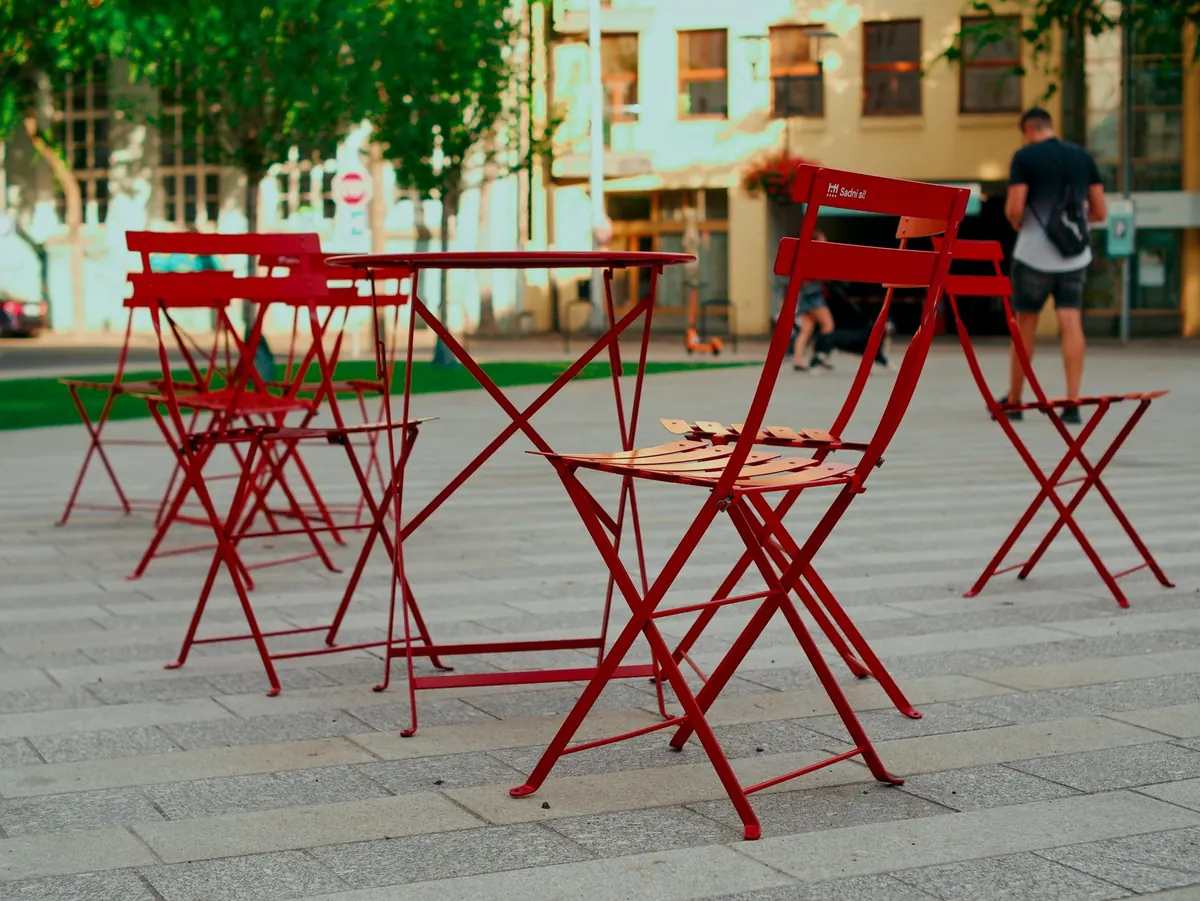
This is the step most people skip. You are allowed to touch the furniture. Put a hand on the table and press; a table that rocks will rock for your entire meal, and the folded sugar packet under one leg is a confession. Sit in the chair for three seconds. Does it have a back, and is the back at a height that actually meets yours? Benches look charming in photographs and become unforgiving after forty minutes.
A quick seating audit, in the order it matters:
- Table height and knee room: can you cross your legs without hitting the underside?
- Spacing: you should be able to pull your chair out and sit down without asking a stranger to move.
- Material: bare metal in the sun, or thin plastic that flexes when you lean back, both get uncomfortable fast.
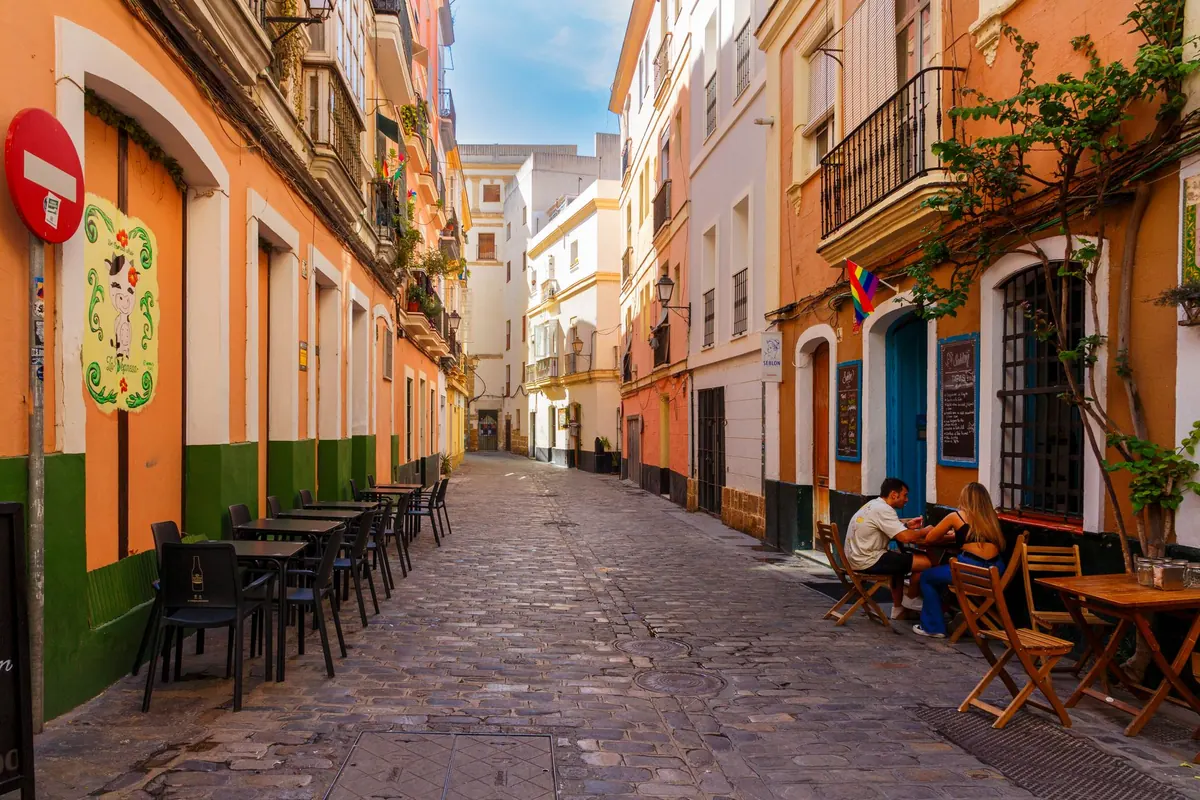
- Ground: cobbles and sloping pavements make every table wobble; a terrace that has solved this with proper feet or a level deck is run by someone who notices things.
- What is at eye level: a bin, a stack of crates, the back of a parked van. You will be staring at it for an hour.
Notice, too, whether the tables have been wiped recently and whether the ashtrays are clean. A terrace is the part of the restaurant that the street can see, and the way it is maintained is usually the most honest information available to you before you order.
Read the menu and the plates
Menus tell you what a kitchen is set up to do. A short, handwritten board usually means the cooking changes with what came in that morning. A laminated book with photographs of every dish and four languages suggests a place built for one-time visitors. Neither is automatically good or bad, but only one of them is usually worth your afternoon.
Look for proportion: a terrace with a huge list of dishes and a tiny kitchen behind it is assembling, not cooking. Then look at what is actually coming out of the door. Do the plates on nearby tables look like the same three dishes repeated? That is often a good sign, because it means the kitchen is doing a few things constantly and well. Are the glasses properly clean, are the oil and vinegar bottles wiped, is there a proper bottle of something local on the shelf rather than a single dusty brand?
The menu is a promise, the plates are the proof
Order one small thing first if you are unsure — a coffee, a plate of whatever the table next to you is having. It is a cheap way to test the pace of service, the temperature of the food and the general mood before you commit to a full meal. And if you see a cover charge or a terrace supplement printed on the menu or the board, read it and decide; asking about it plainly is completely normal.
Watch the locals, and watch the timing
Local habits are the strongest signal on the street, but they need interpreting. A terrace packed with neighborhood regulars at 12:30 on a Tuesday is different from a terrace packed at 21:00 on a Saturday, which mostly tells you the street is busy. Look for the quieter evidence: someone reading a newspaper alone, a couple of retired men with small glasses, staff who greet people by name, a dog settled under a chair with a bowl of water nearby.
Timing matters as much as the crowd. If the neighborhood eats at 13:00 and the terrace is empty at 13:15, that is information. If it fills suddenly at 13:20 and empties by 14:30, you have found a place people use as a routine rather than a treat. Ask one simple question — "Is this one free?" — and listen to how you are answered. Warm, unbothered help is worth more than a beautiful view.
A two-minute field test
- Stop at the corner and note which side of the street is in shadow, and which way the shadows are moving.
- Watch the pavement for a minute. Are people slowing down near the tables?
- Walk past the terrace, not into it, and look at the plates and the glassware on the way.
- Read the menu board and the price format; check the cover charge if there is one.
- Ask for a table in the shade you actually want, rather than accepting the first one offered.
- Sit, press the table, lean back in the chair, and only then order.
When to walk on, and when to sit down
Walk on if the only free tables are in full sun at two in the afternoon, if the pavement is so narrow that every passer-by brushes your chair, if the menu is enormous and the plates on the tables look tired, or if nobody seems to be in charge of the terrace at all. There is no shame in a polite "thanks, we'll keep looking."
Sit down if the shade is deep and about to get deeper, if the chairs have backs and the tables do not wobble, if the board is short and handwritten, and if the people already there look like they live within a few streets. That combination rarely disappoints. And once you have found it, note the street name — a good terrace in an unfamiliar neighborhood is the beginning of knowing that neighborhood, not the end of a search.
Photo: Guerrero De la Luz / Pexels